


TBI Risk in Hockey & Lacrosse
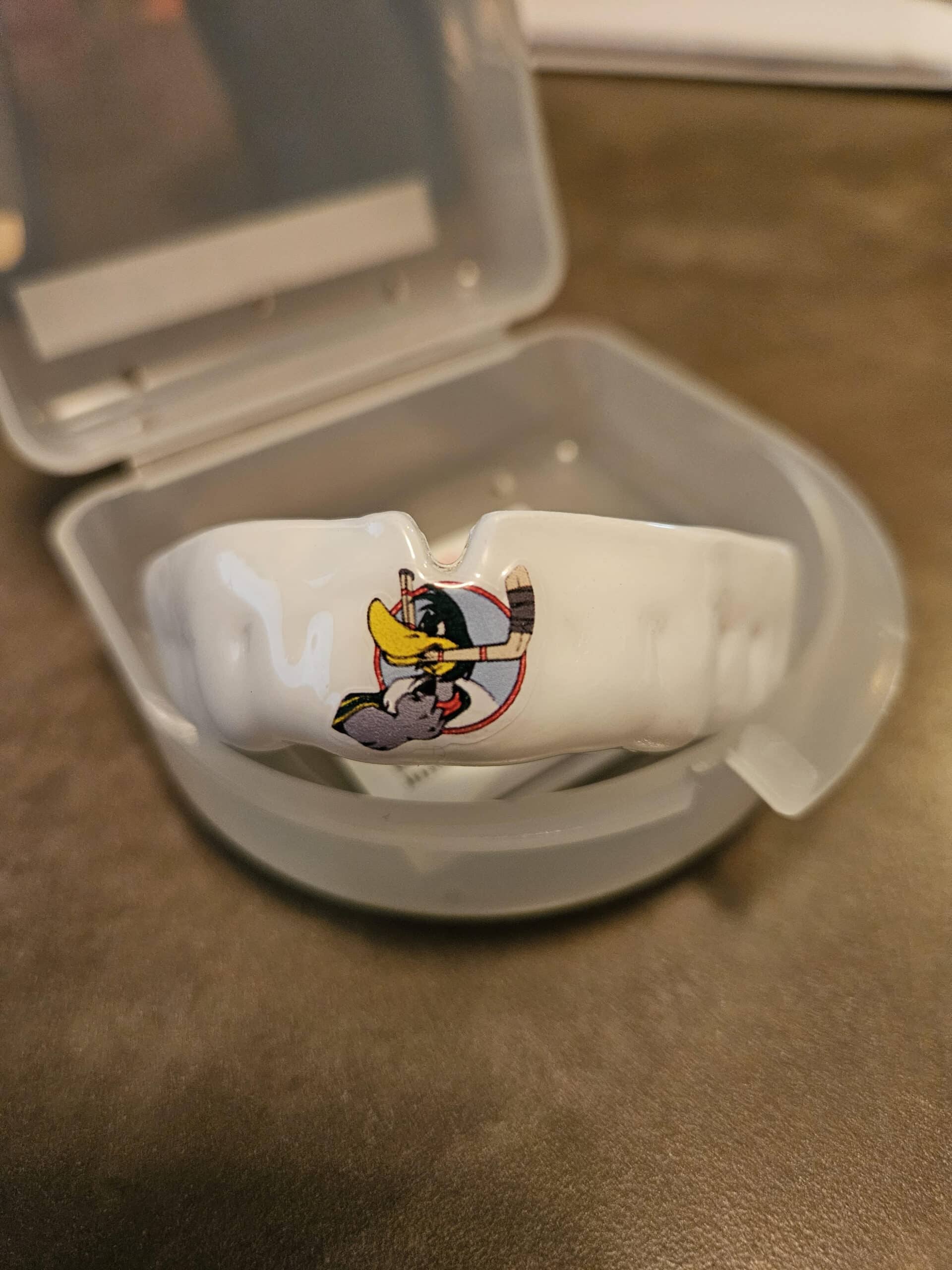
Adult athletes in high-impact sports like ice hockey and lacrosse face a high risk of concussions and other traumatic brain injuries (TBIs) due to frequent collisions, falls, and impacts from equipment (e.g., sticks, pucks, balls). These sports also carry significant risk of dental and facial injuries. For example, roughly one-third of all injuries in lacrosse involve the teeth or mouth1. response, sports governing bodies and health organizations strongly recommend the use of mouthguards. The American Dental Association (ADA) advises wearing a properly fitted mouthguard to reduce the incidence and severity of sports-related oral Injuries2
Likewise, USA Lacrosse considers mouthguards an essential piece of protective equipment to 1 prevent dental/orofacial trauma in lacrosse. Beyond protecting the teeth, researchers and clinicians have explored how mouthguards might also mitigate concussive forces and reduce TBI risk in contact sports (Winters & DeMont, 2014; Knapik et al., 2019).
Protective Role of Sports Mouthguards
A mouthguard is a resilient oral appliance made of soft plastic (often ethylene-vinyl acetate) that covers the teeth of one jaw (usually the upper). It is designed to absorb and dissipate impact forces and to prevent direct tooth-on-tooth contact during collisions. Properly fitted mouthguards cushion the blow from an impact and distribute the force across a larger area, which helps avoid concentrating the impact on a single tooth or point on the jaw (AAPD, 2024). By spreading out and dampening the force, a mouthguard markedly reduces the likelihood of dental fractures, dislocations, or lacerations to the lips and cheeks (Labella et al., 2002; AAPD, 2024). In fact, one study in collegiate basketball found that athletes who wore custom-fitted mouthguards had significantly fewer dental injuries compared to non-users, although concussion rates were similar in that particular sample (LaBella, Smith, & Sigurdsson, 2002). While the primary purpose of mouthguards is to protect the mouth, their design may also influence forces transmitted to the head and brain.
Mechanisms for Reducing Brain Injury
Researchers have proposed two key mechanisms by which mouthguards could help reduce the risk or severity of concussions in contact sports:
- Impact Absorption and Force Dissipation: Modern mouthguard materials are semi-rigid yet yielding (viscoelastic), meaning they deform upon impact and then return to shape, absorbing some kinetic energy in the process. By deforming, the mouthguard prolongs the duration of an impact and reduces the peak force transmitted through the jaw to the skull (Knapik et al., 2019). In essence, the mouthguard acts as a shock absorber or “crumple zone,” soaking up and dispersing impact energy that might otherwise be delivered directly to the teeth and head. This can lower the magnitude of forces reaching the brain, potentially mitigating the blow. Laboratory experiments and materials tests confirm that quality mouthguard materials exhibit high-impact energy absorption, which is why standards (ANSI/ADA, ASTM) emphasize sufficient material thickness and resilience in their design
- Limiting Jaw Occlusion and Transmitted Shock: A critical protective function of mouthguards is preventing the upper and lower teeth from forcefully crashing together (“tooth occlusion percussion”) during impact. In a hard collision—such as a hockey check or lacrosse hit—the lower jaw (mandible) can be driven upward. If unprotected, the force of the mandible slamming into the maxilla (upper jaw) transfers energy directly to the skull base. A mouthguard interposed between the teeth cushions this mandibular impact, creating a small safety buffer. Research dating back to the 1960s first suggested that a 3–4 mm thick mouthguard can slightly separate the mandible from the skull, providing a “recoil space” that attenuates force transmission to the cranial vault (Stenger, 1964 as cited in Gould et al., 2016). More recent sports dentistry findings similarly indicate that aproprerly fitted mouthguard (~3 mm thick) helps position and stabilize the jaw during a collision, so that some impact force is absorbed by the mouthguard and redirected away from the TMJ (jaw joint). By preventing the jaws from violently clamping together, the mouthguard reduces the jarring shock that would otherwise travel from the jawbone to the base of the skull and into the brain (AAPD, 2024). In practical terms, this means the brain may experience a less intense acceleration when the chin or face is struck, potentially lowering concussion risk. This jaw- stabilizing effect also explains why mouthguards can decrease chances of mandibular fractures or dislocations
Evidence from Sports Medicine Research
The hypothesis that mouthguards can reduce concussions has been investigated in both laboratory and field studies. Early cadaver and experimental studies (e.g., Hickey et al., 1967) provided some support for reduced intracranial pressure with mouthguards, but those studies had methodological limitations. Contemporary research offers a mixed picture. Some epidemiological studies suggest a protective trend, while systematic reviews remain cautious:
- Correlational Studies: Notably, a recent case-control study in youth ice hockey reported that players wearing mouthguards had significantly lower odds of concussion than those without mouthguards (Chisholm et al., 2020). In high school football, a randomized trial found that athletes who used custom-made, pressure-laminated mouthguards sustained fewer concussions over a season (3.6% incidence) compared to athletes using standard over-the-counter mouthguards (8.3% incidence) – a statistically significant difference (Winters & DeMont, 2014). These findings imply that a well-fitted, thick mouthguard might confer some reduction in concussion risk in youth and adolescent athletes, presumably by the mechanisms of shock absorption and jaw stabilization described above. Such data have fueled speculation that adult athletes in similar high-contact sports could also benefit from mouthguards in terms of TBI prevention.
- Systematic Reviews and Meta-Analyses: On the other hand, comprehensive reviews have tempered expectations. A 2019 systematic review of 26 studies concluded that while mouthguard use dramatically reduces orofacial injury risk, its effect on concussion incidence is minimal or inconsistent (Knapik et al., 2019). The meta-analysis found only a modest decrease in concussion risk (pooled risk ratio ~1.25 favoring mouthguard users, 95% confidence interval 0.90–1.74), which was not statistically significant. Similarly, sports medicine experts note a lack of high-quality evidence that mouthguards definitively prevent concussions in adults (Gould et al., 2016; Benson et al., 2009). The National Athletic Trainers’ Association and other professional groups have reviewed the literature and caution that “no sound clinical evidence has demonstrated the efficacy of mouthguards for preventing concussion” in athletes. In fact, an official position statement from USA Lacrosse acknowledges “no convincing evidence” that mouthguard use significantly reduces concussion rates, even though some studies hint at a possible benefit. These reviews emphasize that many factors contribute to concussions (impact magnitude, angle, brain physiology, etc.), and a mouthguard alone cannot eliminate the risk of TBI in contact sports.
In summary, real-world evidence is mixed. Mouthguards are proven to prevent dental trauma, and there are plausible biomechanical reasons they could attenuate certain forces involved in concussions. Some athlete studies report lower concussion incidence with mouthguards, particularly when high-quality custom guards are used (Winters & DeMont, 2014). However, other research finds no significant difference, and experts agree that more definitive studies are needed (Knapik et al., 2019; USA Lacrosse Sports Science & Safety Committee, 2021). Importantly, no adverse effects on concussion risk have been found – wearing a mouthguard has not been shown to increase risk in any study (it either helps slightly or has no effect).Thus, the consensus is that athletes should wear mouthguards for their clear dental benefits, with any concussion-reduction effect viewed as a potential additional benefit that is still being researched (ADA, 2021; AAPD, 2024).
For adult hockey and lacrosse players, a properly fitted sports mouthguard is a vital safety device that protects the teeth and mouth and may also contribute to reducing the impact of blows that can cause concussions. By absorbing impact energy and preventing direct jaw collisions, mouthguards act as a form of cushioning between the upper and lower jaws, theoretically lessening the force transmitted to the brain during collisions. While mouthguards are not a guaranteed safeguard against concussion – and should never be viewed as a substitute for helmets, rule changes, and proper technique – they offer a simple, cost-effective layer of protection. Sports medicine and dental organizations universally recommend mouthguards in contact sports to prevent devastating dental injuries, and they advise that the mouthguards be properly fitted and worn consistently to maximize protective effects (AAPD, 2024; USA Lacrosse, 2021). In conclusion, wearing a mouthguard in hockey, lacrosse, and similar sports is a prudent measure that not only shields the athlete’s smile but also helps buffer the jaw and skull from traumatic forces, potentially reducing the severity of a blow and lowering the risk of traumatic brain injury in the event of an accident or collision.
Call our Ken Caryl Dental Office for Better Oral Health
At Canyon View Dentistry, we strive to continuously learn and grow our skills and technology, providing our patients with the most advanced procedures for optimal dental health. In addition, we will treat each patient like family and care for your smile goals as though they were our own.
So don’t hesitate to call us and schedule your first stress-free visit and comprehensive exam.

Cara McCallum
Dentist
Dr. Cara McCallum leads the team at Canyon View Dentistry, practicing enthusiastically and with a commitment to creating and maintaining beautiful smiles. She attended Marquette University and earned a BS in Biological Sciences. Emerging from her undergraduate career with an interest in dentistry, Dr. McCallum finished her DDS work at Baylor College of Dentistry.
What she values about being a dentist is how rewarding it is to make substantial, personal connections with her patients to help them achieve a smile they are proud to show off.