If you have red hair and have ever had trouble getting numb at the dentist, you are not imagining it.
Many redheaded patients tell us they have had past dental experiences where the numbing did not seem to work well, wore off too quickly, or required multiple injections before they felt comfortable. For some patients, this can create real anxiety about seeing a dentist again.
At Canyon View Dentistry in Littleton, CO, we take those concerns seriously. Research suggests that natural redheads may respond differently to certain anesthetics because of variations in a gene called MC1R. This same gene is responsible for red hair color, but it may also influence pain sensitivity and how the body responds to anesthesia.
What Is the MC1R Gene?
MC1R stands for melanocortin-1 receptor. This gene helps regulate pigment in the body.
In many people with red hair, changes in the MC1R gene cause the body to produce more pheomelanin, the reddish-yellow pigment associated with red hair, fair skin, and freckles.
But MC1R may do more than affect hair color. Researchers have found that MC1R variations may also be connected to pain perception and anesthetic response. In other words, the same genetic pathway that contributes to red hair may also influence how some patients experience pain and numbing.
Do Redheads Really Need More Anesthesia?
A well-known study published in Anesthesiology found that women with natural red hair required about 19% more desflurane, a general anesthetic gas, than women with dark hair to prevent movement during anesthesia. The study also found that 9 out of 10 redheaded participants had MC1R gene mutations.
That study focused on general anesthesia, not dental injections specifically. However, it supports what many dental and medical professionals have observed clinically: some redheaded patients may need a more individualized approach to anesthesia.
How Can the MC1R Gene Affect Dental Numbing?
Dental numbing is different from general anesthesia. At the dentist, we typically use local anesthetics such as lidocaine, septocaine, articaine, mepivacaine, or similar injectable anesthetics to numb a specific area of the mouth.
For some redheaded patients, local anesthesia may feel less predictable. This may show up as:
Needing more time to get fully numb
Needing additional anesthetic during treatment
Feeling pressure or sensitivity even after a standard injection
Having a history of “not getting numb” at past dental visits
Feeling more anxious because of previous painful dental experiences
This does not mean redheads cannot get numb. It means some patients may need a dentist who listens carefully, checks numbness thoroughly, and adjusts the approach based on the individual.
Lidocaine, Septocaine, and Other Dental Numbing Agents
Common dental anesthetics include lidocaine and septocaine, also known as articaine. These anesthetics work by temporarily blocking nerve signals in the area being treated.
For many patients, these medications work very predictably. For others, including some redheaded patients or patients with a history of difficult numbing, the process may require extra attention.
At Canyon View Dentistry, we may adjust care by:
Allowing more time for the anesthetic to take effect
Using a different anesthetic when appropriate
Using precise injection techniques
Testing the area before beginning treatment
Adding more anesthetic when clinically appropriate
Using buffered anesthetic to improve comfort and effectiveness
The key is not assuming every patient responds the same way.
Why Some Dental Shots Sting
Many traditional dental anesthetics are naturally acidic. That acidity helps preserve the anesthetic in the cartridge, but it can also contribute to the burning or stinging feeling some patients notice during an injection.
For someone who is already anxious, sensitive, or difficult to numb, that first sting can make the entire appointment feel more stressful.
That is one reason we use buffered anesthesia in our office.
How Buffered Anesthesia Helps
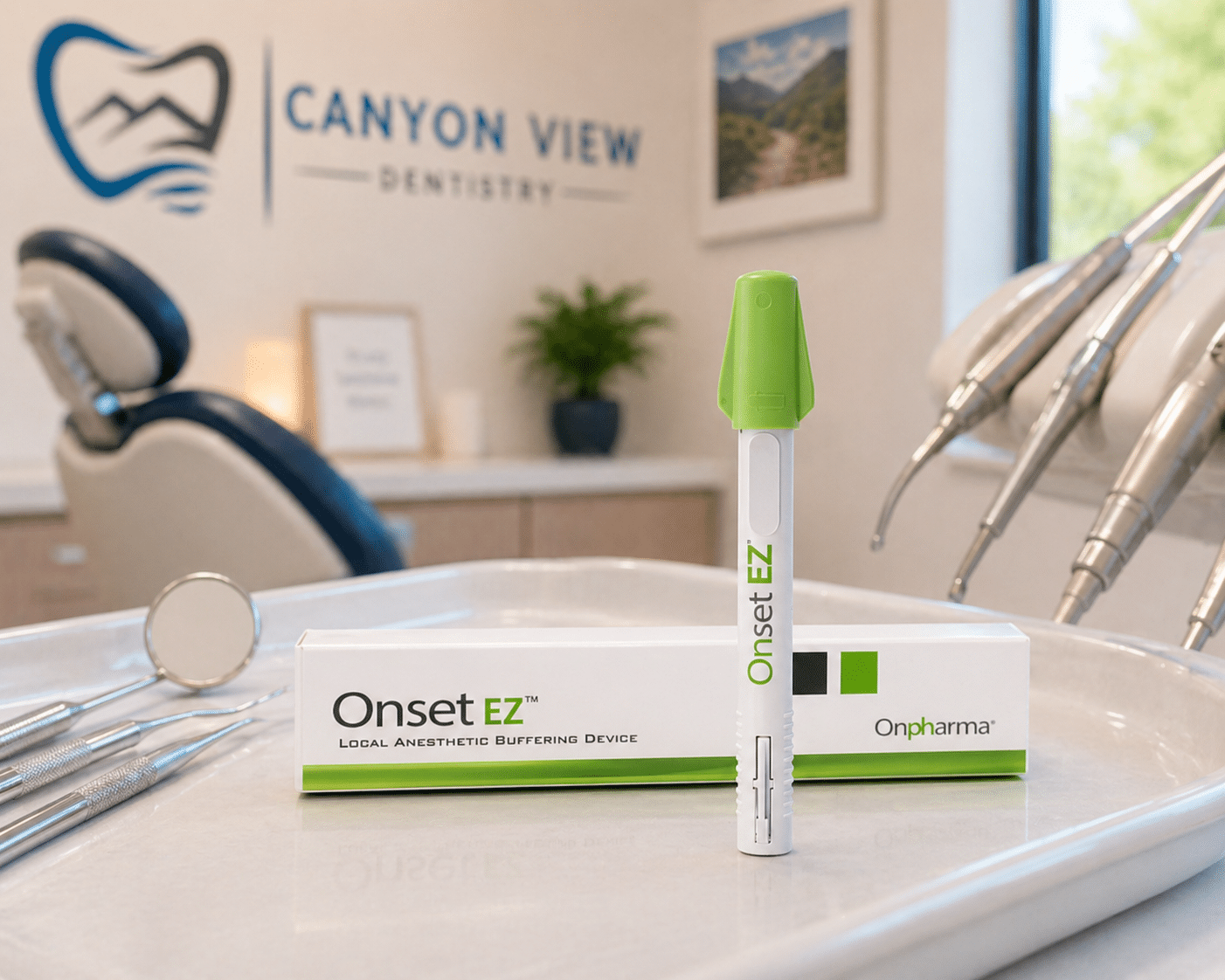
At Canyon View Dentistry, we use Onpharma technology to buffer local anesthetic before the injection.
The Onset EZ Pen by Onpharma is designed to buffer individual cartridges of local anesthetic by adding a precise amount of 8.4% sodium bicarbonate, helping bring the anesthetic closer to a more neutral pH before use. Onpharma states that this process can support faster onset, reduced injection pain, and greater predictability.
In simpler terms, buffering helps make the anesthetic less acidic before it is given.
That may help with:
Less burning during the injection
Faster numbing onset
A more comfortable experience
More predictable anesthesia
Reduced anxiety around dental shots
This can be especially helpful for patients who have had trouble getting numb in the past, including some redheaded patients.
Why This Matters for Redheaded Patients
If you are a redhead and have had a bad dental experience, you may have been told things like:
“You should be numb by now.”
“You are just sensitive.”
“This should not hurt.”
But your experience may have a real biological explanation.
Patients with MC1R variations may process pain and anesthesia differently. That does not mean every redheaded patient will have trouble getting numb, and it does not mean anesthesia will not work. It simply means your dentist should take your history seriously and personalize your care.
Our Approach at Canyon View Dentistry
We believe comfortable dentistry starts with listening.
If you tell us you have had trouble getting numb before, we want to know. If you are a redhead and dental anesthesia has been difficult in the past, we will build that into your care plan.
Our approach may include:
Discussing your past dental experiences before treatment
Using buffered anesthetic when appropriate
Giving the anesthetic enough time to work
Checking numbness before starting
Communicating throughout the procedure
Stopping and adjusting if you feel discomfort
Our goal is not to rush through treatment. Our goal is to help you feel safe, heard, and comfortable.
You Are Not “Hard to Work On”
Many patients who struggle with dental numbing feel embarrassed or frustrated. They may avoid dental care because they are afraid of repeating a painful experience.
We want you to know: you are not difficult. You are not overreacting. You may simply need a more thoughtful approach.
Modern dentistry has better tools, better techniques, and better ways to support patient comfort than ever before.
Looking for a Dentist in Littleton Who Understands Redheads and Dental Numbing?
If you are searching for a new dentist in Littleton and you have red hair, dental anxiety, or a history of trouble getting numb, Canyon View Dentistry would be honored to help.
We use personalized care, careful communication, and buffered anesthesia technology to help make dental visits more comfortable and predictable.
If you have ever thought, “Dental numbing does not work well on me,” please tell us. We will listen.
Frequently Asked Questions About Redheads and Dental Numbing
Do redheads really need more dental anesthesia?
Some redheaded patients may need more anesthetic, more time, or a different approach to become fully numb. Research has shown a connection between natural red hair, MC1R gene variations, and increased anesthetic requirement in certain settings. However, every patient is different.
Does the MC1R gene affect lidocaine?
MC1R variations may influence pain sensitivity and anesthetic response. While not every redheaded patient has trouble with lidocaine, some patients report that local anesthetics feel less predictable or require additional dosing.
Is septocaine better than lidocaine for redheads?
Septocaine, also known as articaine, can be very effective in dentistry, but the best anesthetic depends on the patient, procedure, and location being treated. At Canyon View Dentistry, we choose anesthetics based on your history, comfort, and clinical needs.
What is buffered anesthesia?
Buffered anesthesia is local anesthetic that has been adjusted closer to the body’s natural pH before injection. This can help reduce the sting of the shot and may help the anesthetic work faster and more predictably.
Can buffered anesthetic help if I am hard to numb?
Buffered anesthetic may help improve comfort and predictability, especially for patients who have had painful injections or difficulty getting numb in the past.
Should I tell my dentist if I am a redhead and have had trouble getting numb?
Yes. Your dental history matters. If you have red hair, dental anxiety, or past difficulty getting numb, tell your dentist before treatment begins so they can adjust your care.
References
Liem EB, Joiner TV, Tsueda K, Sessler DI. Increased anesthetic requirement in redheads. Anesthesiology. 2004;101(2):279–283. doi:10.1097/00000542-200408000-00006
https://pmc.ncbi.nlm.nih.gov/articles/PMC1362956/?utm